September 2026
St. Sophia Erected, and a Deacon Ordained
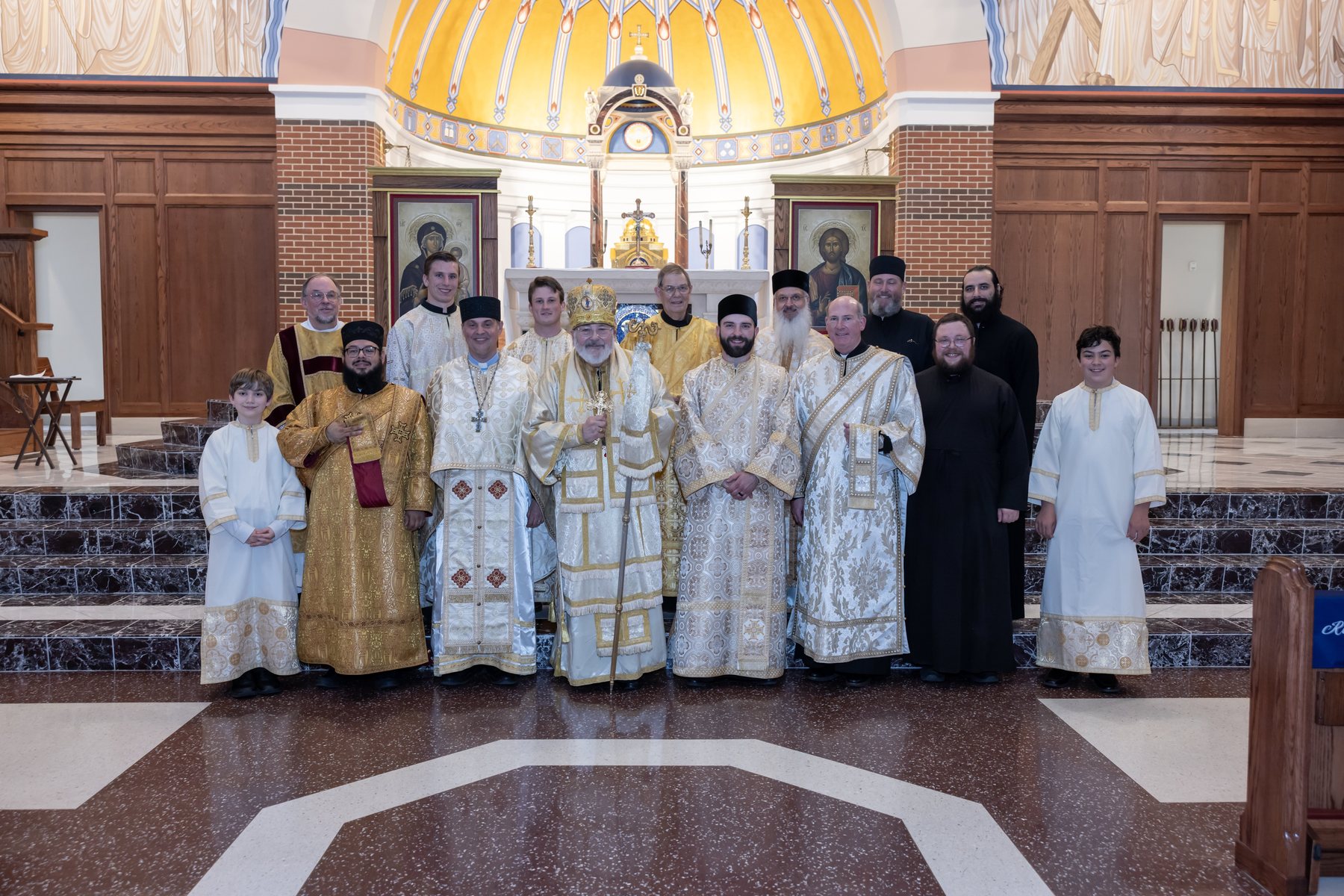
On September 15, by decree of His Grace Bishop John Michael Botean, Eparch of St. George in Canton, the small Byzantine Catholic community gathering in Bryan–College Station was canonically erected as St. Sophia Romanian Byzantine Catholic Outreach. Eleven days later the bishop came to Texas, and over two days he ordained the community’s administrator to the holy diaconate, baptized an infant, and received a woman into full communion with the Catholic Church.
For a community that began with a handful of people praying in borrowed rooms, it was a great deal to receive at once.
A name and a place
The decree gives St. Sophia juridic personality within the Church and places it directly under the Eparchial Bishop. An Outreach is the first canonical form a new community may take. If it grows, it may in time be raised to a Mission, and perhaps one day to a Parish. It means St. Sophia now exists in the Church’s own law rather than only in the goodwill of those who gather, keeps its own sacramental registers, and is accountable to the bishop.
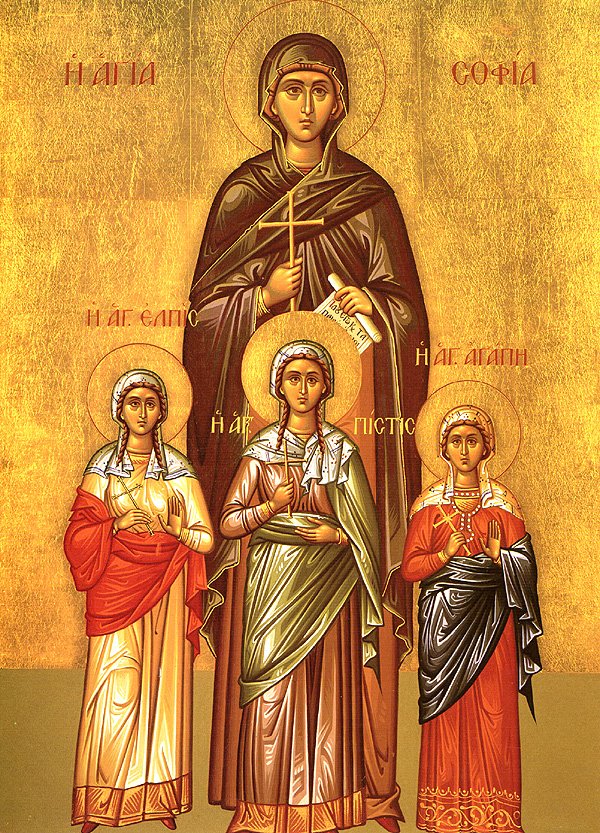
Dr. Alexandru Hening, a mathematician at Texas A&M University, was appointed its first administrator, with pastoral oversight entrusted to the Very Reverend Călin Tamiian of Nashville. The decree was signed and took effect on September 15, and was formally communicated to Dr. Hening on September 17, the feast of St. Sophia and her daughters Faith, Hope, and Charity.
The office of a bishop
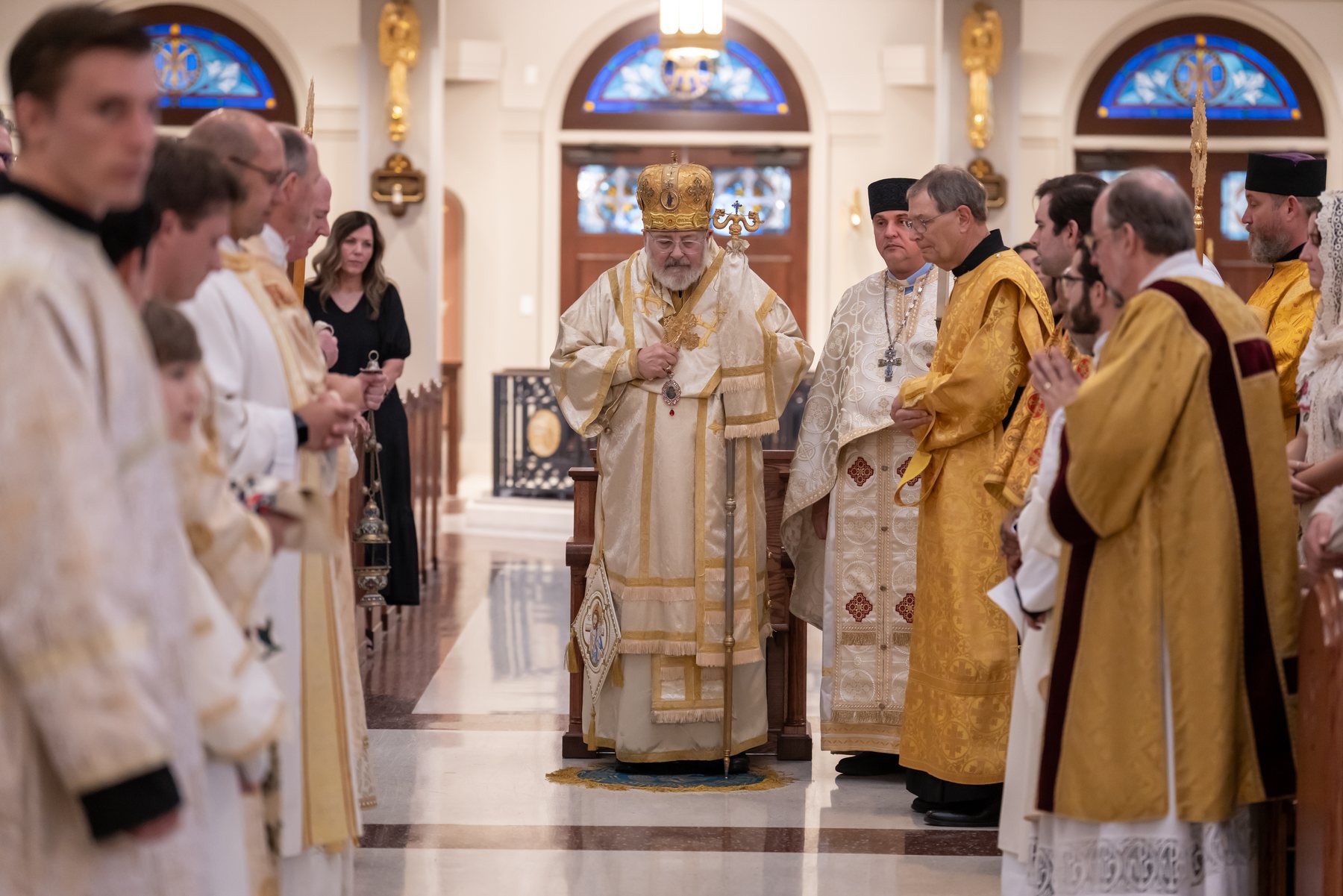
Byzantine Catholics understand the bishop as the successor of the apostles and the visible principle of unity in the local Church. Every Divine Liturgy in the eparchy is celebrated in communion with him, and his name is proclaimed aloud in each one. Priests and deacons serve as his collaborators, exercising a ministry that is his before it is theirs.
This is why a hierarchical Divine Liturgy carries a particular solemnity. The bishop is received and vested in the middle of the church, in full view, and the whole assembly acclaims him. The Church usually scattered across a diocese is, for a few hours, visibly gathered around the one who holds it together.
The diaconate
In the ancient world a diakonos was an emissary, one entrusted by an authority with a task to carry out in his name. Christ himself is the first such emissary, for “the Father has sent his Son as the Savior of the world” (1 John 4:14). From the beginning the Church has understood the deacon in the same pattern, as the emissary of the bishop.
St. Ignatius of Antioch, writing on his way to martyrdom early in the second century, set the three orders side by side:
“Let all men respect the deacons as Jesus Christ, even as they should respect the bishop as being a type of the Father and the presbyters as the council of God and as the college of Apostles. Apart from these there is not even the name of a church.”
— St. Ignatius of Antioch, Letter to the Trallians 3, trans. J. B. Lightfoot
He was careful about what kind of service he meant. Deacons, he wrote, are “deacons of the mysteries of Jesus Christ,” and “not deacons of meats and drinks but servants of the Church of God.”
The Apostolic Tradition, an ancient church order, bears witness to why the bishop alone lays hands upon a deacon:
“When the deacon is ordained, this is the reason why the bishop alone shall lay his hands upon him: he is not ordained to the priesthood but to serve the bishop and to carry out the bishop’s commands.”
— The Apostolic Tradition 9, trans. B. S. Easton
In the Byzantine Liturgy that service is visible throughout. The deacon leads the people’s prayers in the litanies, proclaims the Gospel, censes the icons and the faithful, and stands between the altar and the nave, carrying the needs of the people to the one who presides. Protodeacon B. David Kennedy of the Ukrainian Catholic Eparchy of Toronto describes him as “an angelic servitor assisting at the heavenly liturgy.”
The new deacon takes his place in a line that runs from Stephen and Philip, the first deacons in the Acts of the Apostles, through St. Ephrem the Syrian and St. Francis of Assisi, both of whom remained deacons all their lives.
Saturday: the ordination
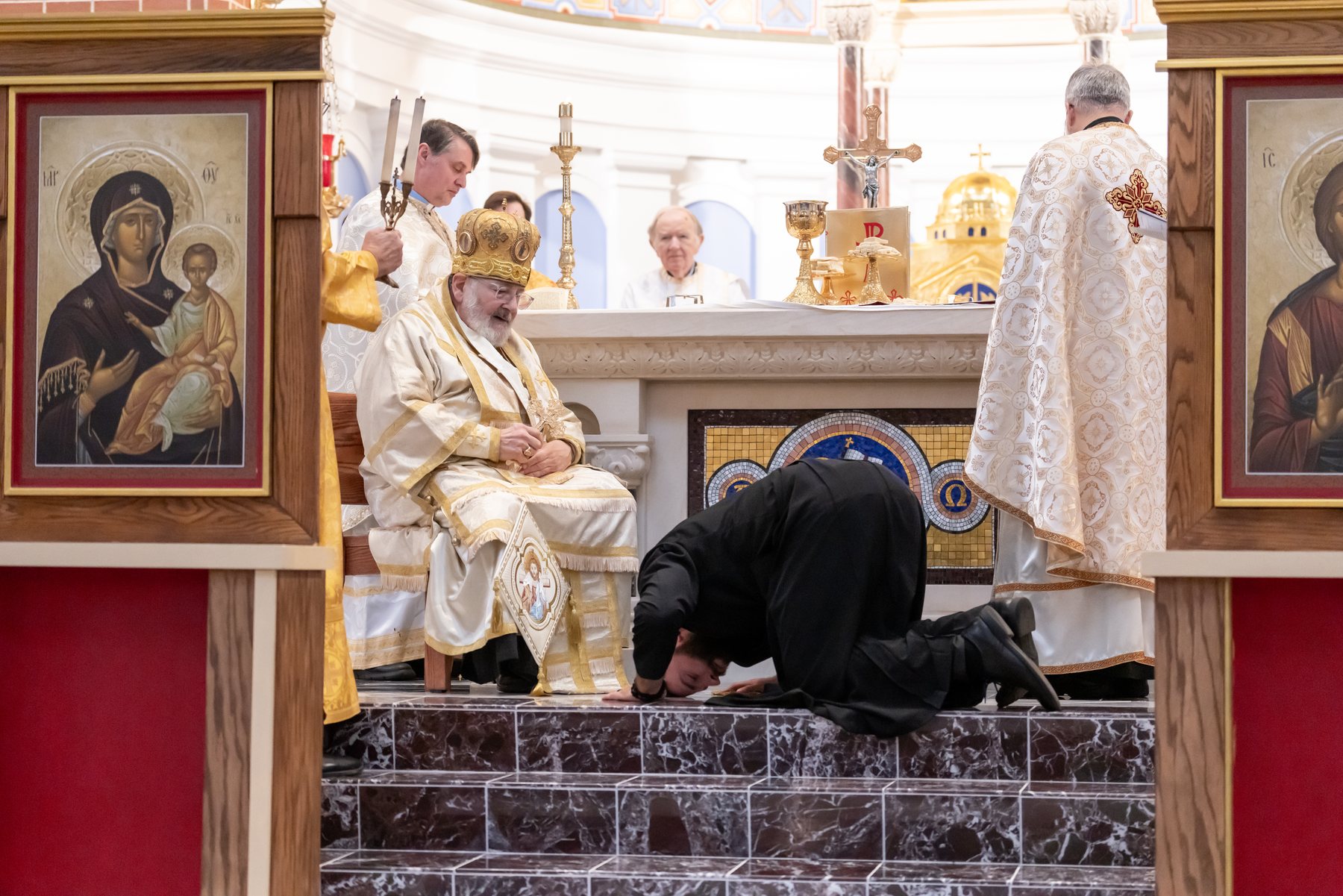
On Saturday, September 26, at St. Mary’s Catholic Church in College Station, Bishop Botean ordained Alexandru Hening to the holy diaconate. A deacon is ordained after the Anaphora, because his ministry is bound to the Eucharist, to serve at the holy Gifts and to bring Holy Communion to the faithful. The ordinand was led three times around the holy Table, knelt with his forehead resting upon it, and the bishop laid his hand on him and prayed. He was then vested piece by piece, and at each vesting the whole church cried out “Axios!” — “He is worthy!”
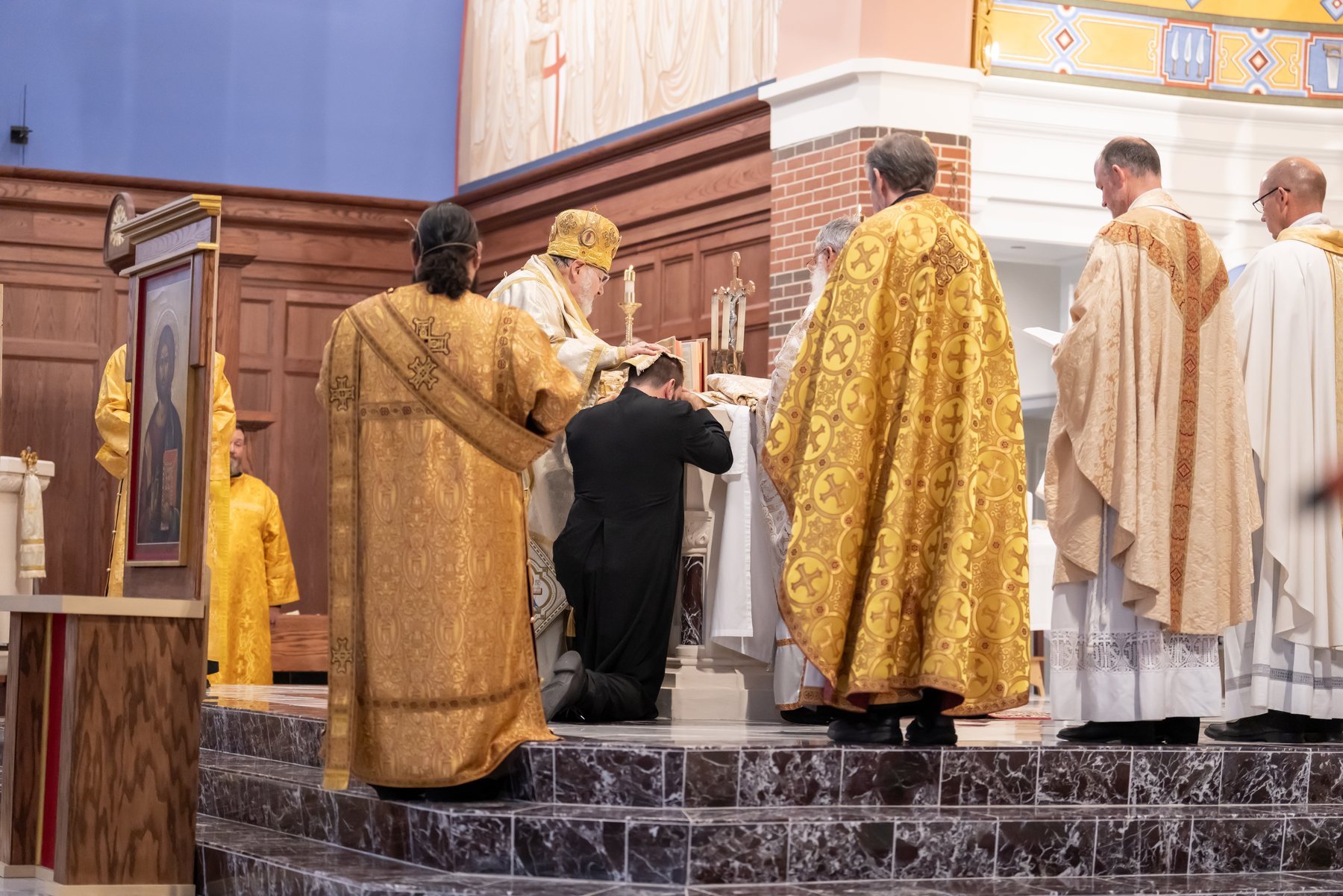
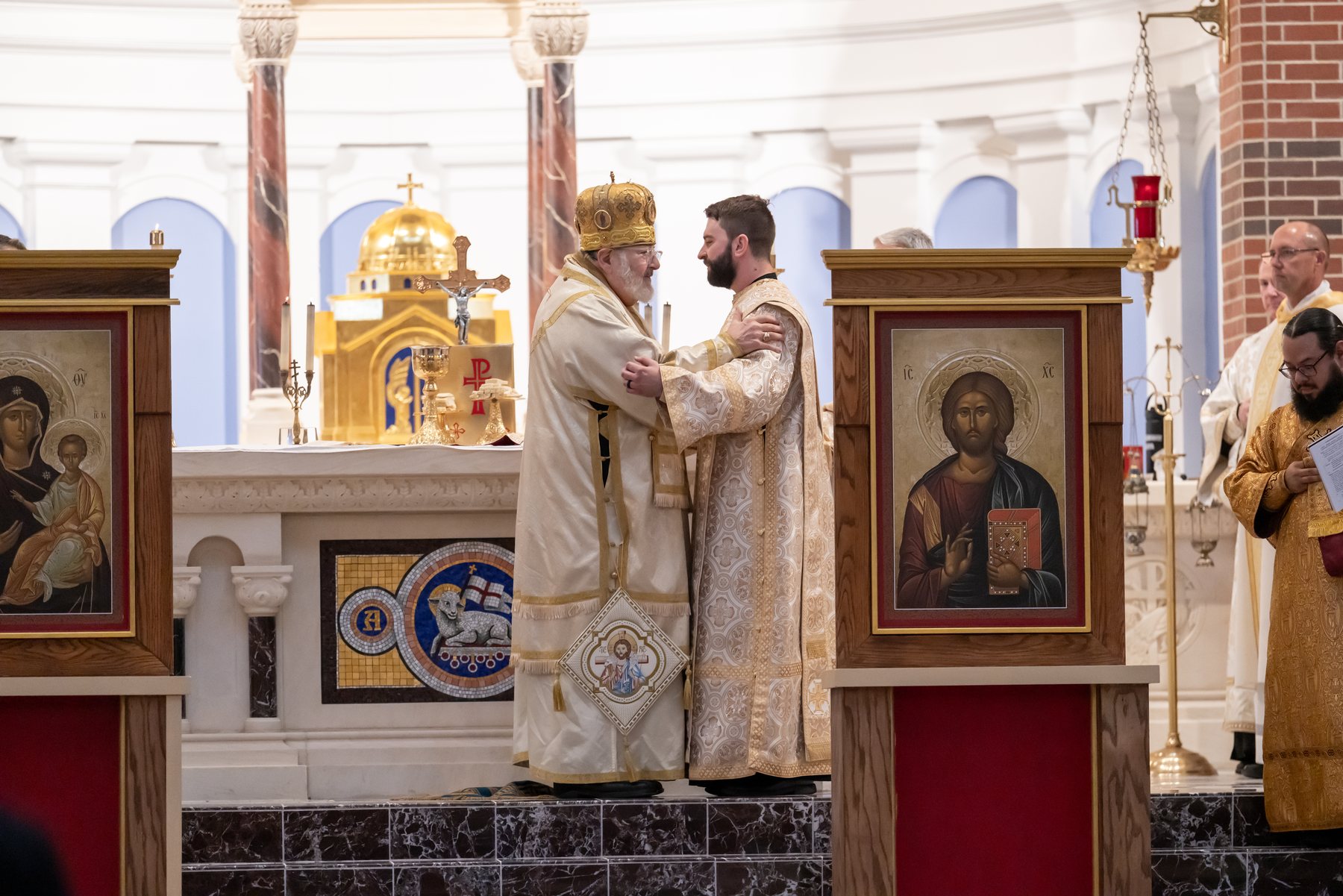
The path to that moment was not short. The new deacon spent much of his adult life as an atheist, convinced that faith and science stood in conflict, until the arguments of philosophy, and the grace of God working through them, brought him to faith. Conversations with Father Iuliu Muntean, and a visit to Canton in 2022, led to the question of whether he might serve at the altar.
Sunday: Christian initiation
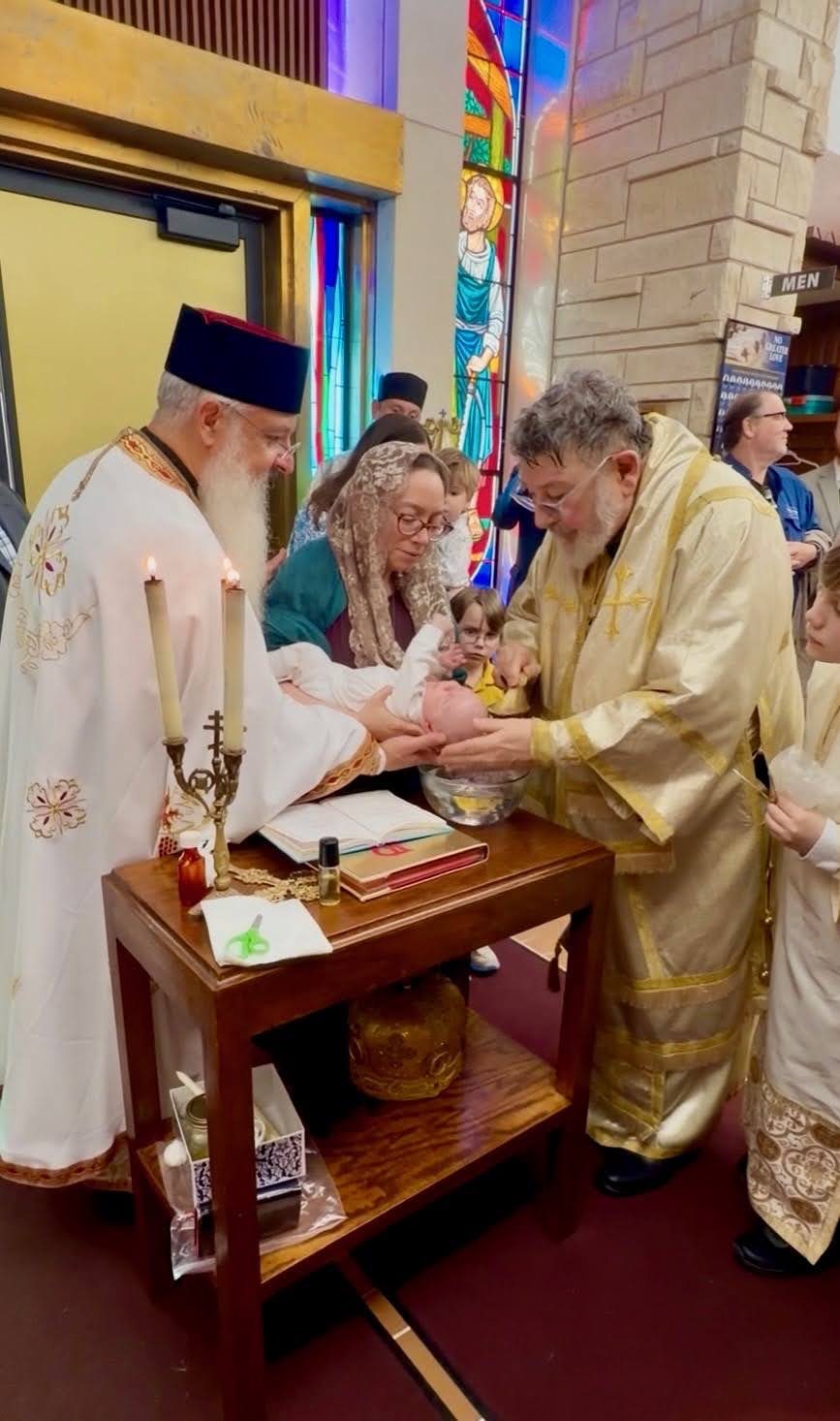
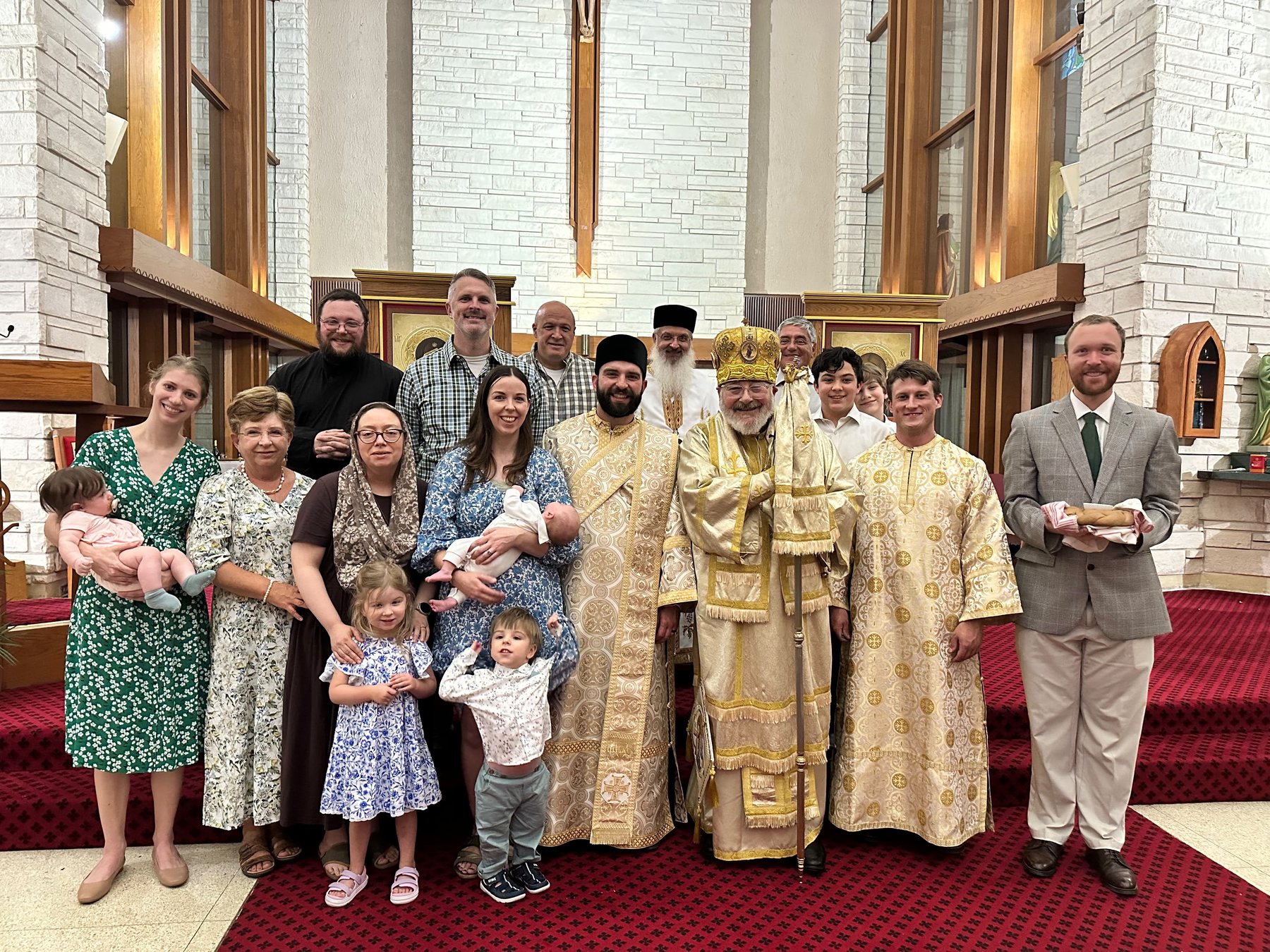
On Sunday the bishop celebrated a second Hierarchical Divine Liturgy at St. Joseph Catholic Church in Bryan, the first served by the newly ordained deacon. Beforehand he baptized and chrismated Luca Apollonius Hening, the deacon’s infant son, who then received Holy Communion at the same service.
In the Byzantine tradition these three sacraments are celebrated together. The newly baptized is washed, sealed with the Holy Spirit, and fed at the Lord’s table in one continuous movement, whatever his age, and the Church receives the child fully into her life on the faith of his parents and godparents.
At the same Liturgy, Viviana Hening, the deacon’s mother, was received from the Orthodox Church into full communion with the Catholic Church, as a member of the Romanian Byzantine Catholic Church. Three generations of one family were gathered at the altar on the same afternoon.
With gratitude
To His Grace Bishop John Michael Botean, who came a long way to be with us, and whose visit affirmed the life and mission of this small community.
To the Very Reverend Iuliu Muntean, Protosyncellus, whose patient guidance over several years formed the deacon ordained on Saturday.
To the Very Reverend Călin Tamiian, who mentored the deacon and has encouraged this community from Nashville without ever making the distance felt.
To the Reverend Richard Hinkley, STL, the deacon’s spiritual father, who drives from Houston month after month to give St. Sophia the Divine Liturgy.
To Reader Matt, for his service at the altar across both days.
To His Excellency Bishop Daniel Garcia of Austin, who welcomed an Eastern Catholic community into his diocese.
To Father Will Straten of St. Mary’s in College Station and Father Brian Eilers of St. Joseph in Bryan, who opened their churches and their halls to us with great generosity, and without whom none of this would have been possible.
And to the people of St. Sophia, who prayed, sang, carried chairs, brought food, and gave generously when there was no altar and no certainty that any of this would last. What was established this September is what they had already built.
Glory to Jesus Christ — Glory Forever